

At Rebound Fitness, we believe movement is medicine. We’re incredibly proud to partner with The Pink Ribbon Foundation to highlight the vital role physical activity plays in breast cancer awareness and long-term health.
While there is no single way to prevent cancer, a wealth of research shows that regular movement can help reduce the risk of developing breast cancer and may also lower the chances of recurrence for those who have been through treatment.
For anyone wanting to take a proactive step toward better health, rebounding offers a simple, low‑impact way to support the body and stay active.
Important Medical Disclaimer: We’re passionate about the benefits of rebounding, but your health and safety is our priority. This article is for informational purposes only and does not constitute medical advice. Maintaining a healthy lifestyle is a powerful tool in risk reduction, but it is not a guarantee of prevention. Please consult your GP or healthcare provider before beginning a new exercise regime, especially if you are managing a previous diagnosis or other health conditions.
How Rebounding Can Support Your Health & Reduce Risk
- Hormonal Balance: Regular movement helps support healthy hormone levels, including oestrogen, which is partly influenced by body fat levels.
- Immune Support: Exercise helps circulate immune cells throughout the body, supporting the body’s natural ability to monitor and respond to abnormal cells.
- Better Metabolic Health: Physical activity supports healthy insulin levels and overall metabolic function, both of which improve long‑term health.
- Inflammation Management: Consistent aerobic exercise can help reduce chronic inflammation, which is associated with many long‑term conditions.
- Easy to Stick With: Because rebounding is low‑impact and enjoyable, many people find it easier to maintain as a long‑term habit compared to high‑impact workouts.

The Science: Why Movement Matters
Leading health organisations recognise exercise as a cornerstone of supporting overall health and reducing cancer risk factors.
For example, Cancer Research UK highlights that staying active helps maintain a healthy weight and supports digestion, reducing the time the body is exposed to potentially harmful waste products.
Guidelines from the American Society of Clinical Oncology (ASCO) also encourage regular aerobic and strength‑based exercise for people during and after cancer treatment. Research published via PubMed Central (PMC3076351) suggests that women who are regularly active may reduce their risk of breast cancer by around 25% compared with those who are least active.
How Rebounding compares to other forms of exercise
Rebounding is a gentle, full‑body workout. The bouncing motion activates muscles throughout the body while remaining low‑impact on the joints.
- Weight Management: Maintaining a healthy weight is one of the most significant lifestyle factors linked to reduced breast cancer risk. Rebounding can burn calories efficiently while feeling less strenuous because the mat absorbs much of the impact.
- Lymphatic Circulation: The gentle up‑and‑down movement helps stimulate lymphatic flow, supporting the body’s natural waste‑removal processes. Learn more about Rebounding with Lymphoedema.
- Stress Relief: The rhythmic motion of rebounding is surprisingly calming. It encourages the release of endorphins and helps lower stress hormones, supporting overall wellbeing.
Reducing the Risk of Recurrence
For many people who have experienced breast cancer, the question often becomes: What can I do now to support my health moving forward?
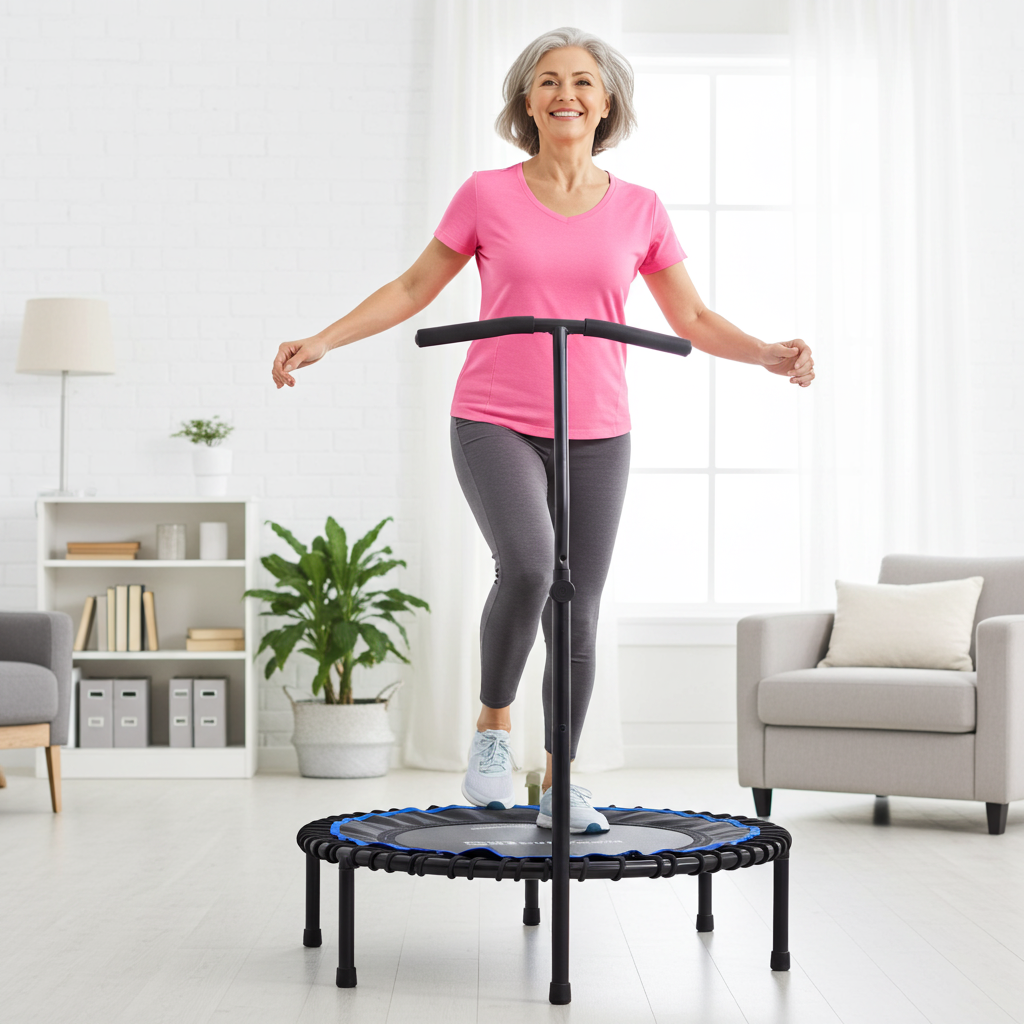
Staying physically active can play an important role. Rebounding is especially helpful because it’s adaptable – whether someone is starting with a gentle “health bounce” after treatment or gradually building back to higher fitness levels.
Try the “Proactive 5” Mini Routine
- Gentle Warm‑Up (30 secs): Stand with feet shoulder‑width apart. Keep your toes on the mat and gently lift your heels to create a soft bounce.
- Light Aerobic Bounce (2 mins): Start a small, controlled bounce. If comfortable, allow your feet to lift slightly off the mat and swing your arms naturally.
- Gentle Twist (1 min): While bouncing lightly, rotate your hips slightly from side to side to engage your core and stimulate circulation.
- Arm Press (30 secs): Continue bouncing while pushing your arms forward and then upward to engage the upper body.
- Cool Down & Breathing (1 min): Return to the gentle heel bounce and take a few slow, deep breaths.
Supporting the Cause
The Pink Ribbon Foundation supports those affected by breast cancer by funding vital projects across the UK, from research to support groups.
At Rebound Fitness, we are committed to supporting their mission. To help you start your proactive health journey, simply use the code PINKRIBBON at checkout.
You’ll receive an exclusive 10% discount on your purchase and we’ll donate an additional 10% directly to the Foundation to help fund the fight against breast cancer.


Important Health Note: The information provided in this article, in partnership with The Pink Ribbon Foundation, is intended to support, not replace, the relationship between a patient and their healthcare team. Rebounding is a physical activity that should only be undertaken once you have received medical clearance, particularly if you have underlying health conditions or are in recovery. Rebound Fitness and The Pink Ribbon Foundation are not responsible for any injuries or health complications resulting from the use of the information provided in this article. Always seek the advice of a qualified health provider with any questions regarding a medical condition.


