

We often get asked by people which Rebounder is best for them. The right rebounder for you comes down to four key things – bungee vs. spring, the perfect size for your body, how much space you have and how you plan to store it and whether you need a stability bar for extra support.
To get the full benefits of rebounding, you need a rebounder that’s built to last. Choose one made from quality materials, and buy from a company that backs it up locally with expert advice, a warranty and spare parts long after the warranty ends.
Cheap rebounders are often little more than toys. Their parts can’t be replaced, so when the mat wears out, the whole thing goes in the bin.
If you’re short on time, jump straight to Bungee or Spring?, Size Guide, or Folding vs Non-Folding. Otherwise, here’s the full picture.
What to Look for in a Quality Rebounder
There are many rebounders, mini trampolines and trampettes on the market from a wide range of manufacturers – and a lot of published research on the genuine health and fitness benefits of rebounding. But to actually get those benefits, and to get a rebounder that lasts, quality matters. Watch out for:
- Height off the ground: should be more than 9 inches to get the right bounce
- Weight of the unit: should be more than 10kg – anything lighter tends to be unstable during a workout
- Local supplier support: look for local customer service and warehousing, not an overseas-only operation
- Genuine expertise: are they a generalist catalogue company, or knowledgeable in rebounding?
- Track record: do they have outstanding customer reviews for their product range and customer service. Do they support customers well even when things don’t go to plan?
- Test certificates: do they have UK/EU/USA test certificates?
Cheaper rebounders often cut corners here – components that can’t be replaced individually, so the whole unit gets thrown away the moment the mat wears out. Buying well the first time avoids that.
What Size Rebounder Do You Need?
Size is the first thing to get right and “what size rebounder should I buy?” is the question we’re asked most often.
There is no right or wrong answer here and personal preference plays an important factor in your decision.
The short answer: most adults are well suited to a 39″ or 40″ frame. It gives a genuinely effective, low-impact bounce without needing much floor space. Go up to 44″ or 47″ if you’re tall or enjoy more room when you’re bouncing.
| If you are... | Choose |
|---|---|
| Under 6ft, bouncing solo | 40" (Fit Bounce Pro or Maximus Pro) |
| Over 6ft, or wanting maximum room | 47" (Fit Bounce Pro XL) |
| Bouncing with a carer or therapist | 47" (Fit Bounce Pro XL) |
You may want to size up to the 47″ Fit Bounce Pro XL if:
- You’re taller or want a larger mat surface to move more freely
- You’re using the rebounder for Flexi Bounce Therapy, where a therapist or carer may need to stand on the mat alongside the user to provide physical support
- You simply prefer extra room to move, twist, and vary your workouts
As a general rule: the taller you are, or the more support you need, the more mat surface is worth having – but bigger isn’t automatically better if you’re short on space or bouncing solo.
Bungee or Spring Rebounder?
Both bungee and spring rebounders have a genuine place in rebounding – which is right for you usually comes down to personal preference and budget. (Full detail in our dedicated Bungee vs Spring guide.)
- Bungee: quieter, slower, more controlled bounce. Great for family use, for children and young people with SEND needs, and for complete beginners – as well as advanced users who want to work harder.
- Spring: better suited to faster-tempo fitness bouncing. There’s some noise from the metal springs, though this is easily minimised with a little coconut oil or Vaseline applied occasionally.
Bungee Rebounders
All of our bungee models come with warranty, a full spare parts service, and FREE LIFETIME ACCESS to online rebounding workouts. A handle bar is available separately for all models if you’d like extra balance support.
| Model | Size | Bouncing Area | Folding | Best for |
|---|---|---|---|---|
| Fit Bounce Pro | 39″ | 26″ | Half-folding | Adults & children, everyday fitness at home |
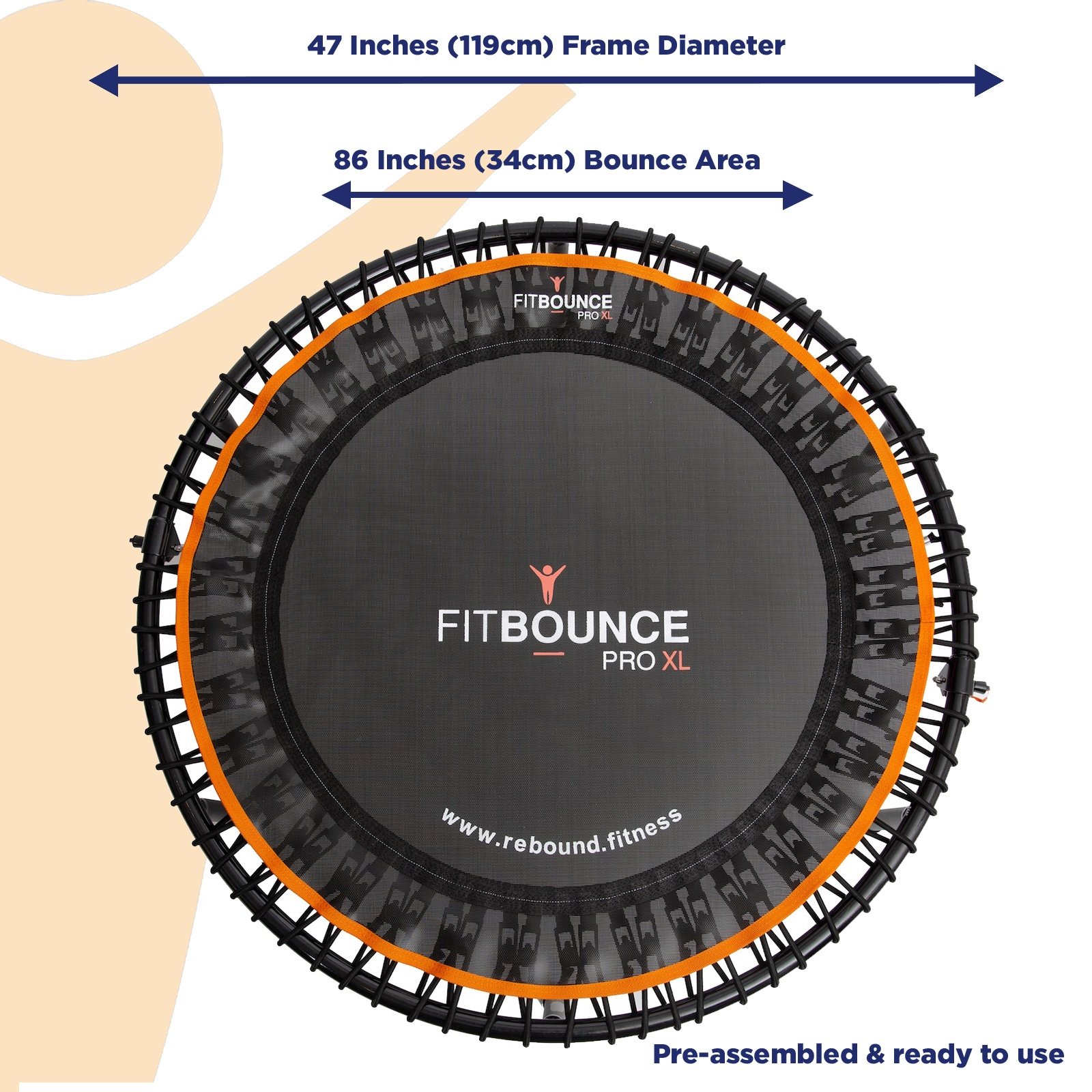
| Fit Bounce Pro XL | 47″ | 34″ | Half-folding | Taller users, therapy support, extra room |
| Maximus Pro Bungee with T-Bar | 40″ | 26″ | Non-folding | Daily use, permanent set-up, strength/cardio |
Fit Bounce Pro: a premium, 40″ half-folding indoor fitness trampoline designed for both adults and children. Engineered with ultra-quiet, professional-grade bungee springs, it delivers a smooth, joint-friendly bounce and an outstanding workout experience. With its sleek design and robust build, it’s perfect for fun, effective exercise at home.
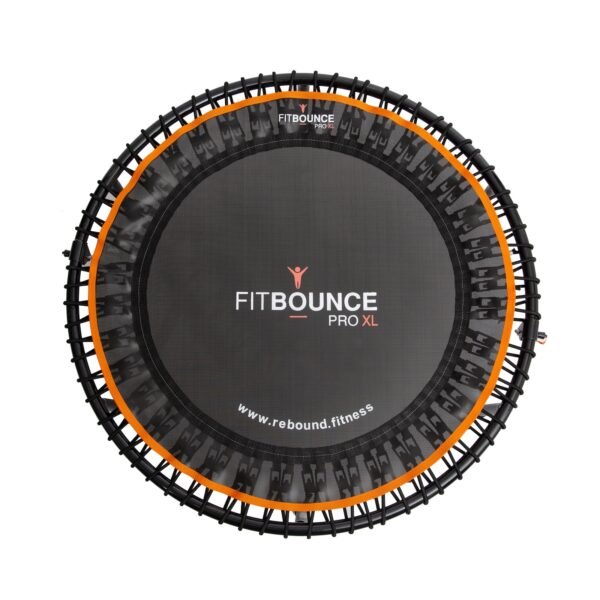
Fit Bounce Pro XL: The Fit Bounce Pro XL bungee rebounder has 47″ frame and an extra-large jumping area, is half folding and provides a supremely quiet bounce. Built to deliver an orthopedic-quality bounce, it’s half-folding design makes it perfect for fun, effective exercise at home and for therapeutic use. Suitable for adults & children & officially approved by ReboundTherapy.org, the Fit Bounce Pro XL is also the rebounder of choice for supporting adults & children with additional needs.
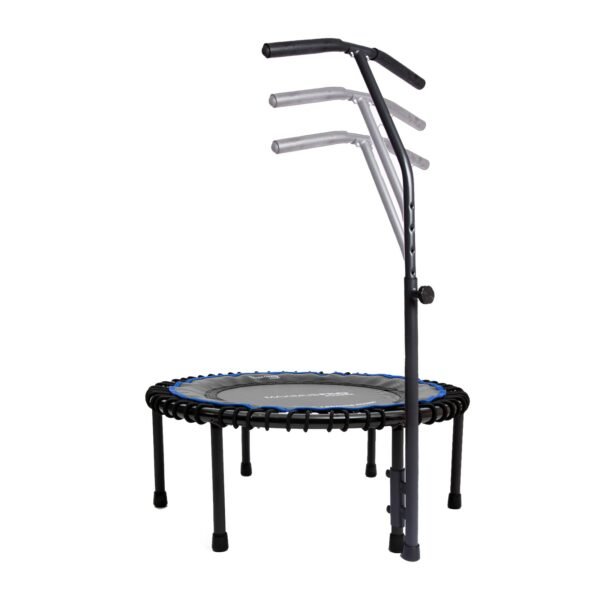
Maximus Pro Bungee with T-Bar: The Maximus Pro Bungee Rebounder is a premium-quality indoor fitness trampoline designed for a smooth, silent and joint-friendly bounce. Featuring professional-grade bungee cords instead of noisy springs, it provides a soft landing and the perfect rebound for effective low-impact cardio, balance training and strength workouts. It comes with a T-Bar for additional support that can be set up in minutes.
Flexi Bounce at Home: is great for children and young people with SEND needs and can be used by the whole family. Includes the Fit Bounce Pro or the Fit Bounce Pro XL rebounder and FREE access to online workouts and information to support parents/carers of children and young people with SEND needs.


Folding vs. Non-Folding: Which Should You Choose?
Most of our customers don’t fold their rebounder away after every session. People often leave their rebounder flat on the floor or standing upright in a corner -perfectly primed and ready for whenever they fancy a bounce!
The beauty of the folding frame is all about giving you ultimate flexibility. While it’s effortless to leave out for your daily workouts, the folding mechanism is an incredible bonus feature designed for life’s transitions. It’s there to give you maximum space exactly when you need it most.
If you’ve got a permanent spot for your rebounder and don’t expect to move it often, non-folding is the simplest choice. If you’ll need to resize occasionally, half-folding and quarter-folding models gives you that option.
Do You Need a Stability Bar (T-Bar)?
One last consideration, and it’s an easy one: do you want something to hold on to?
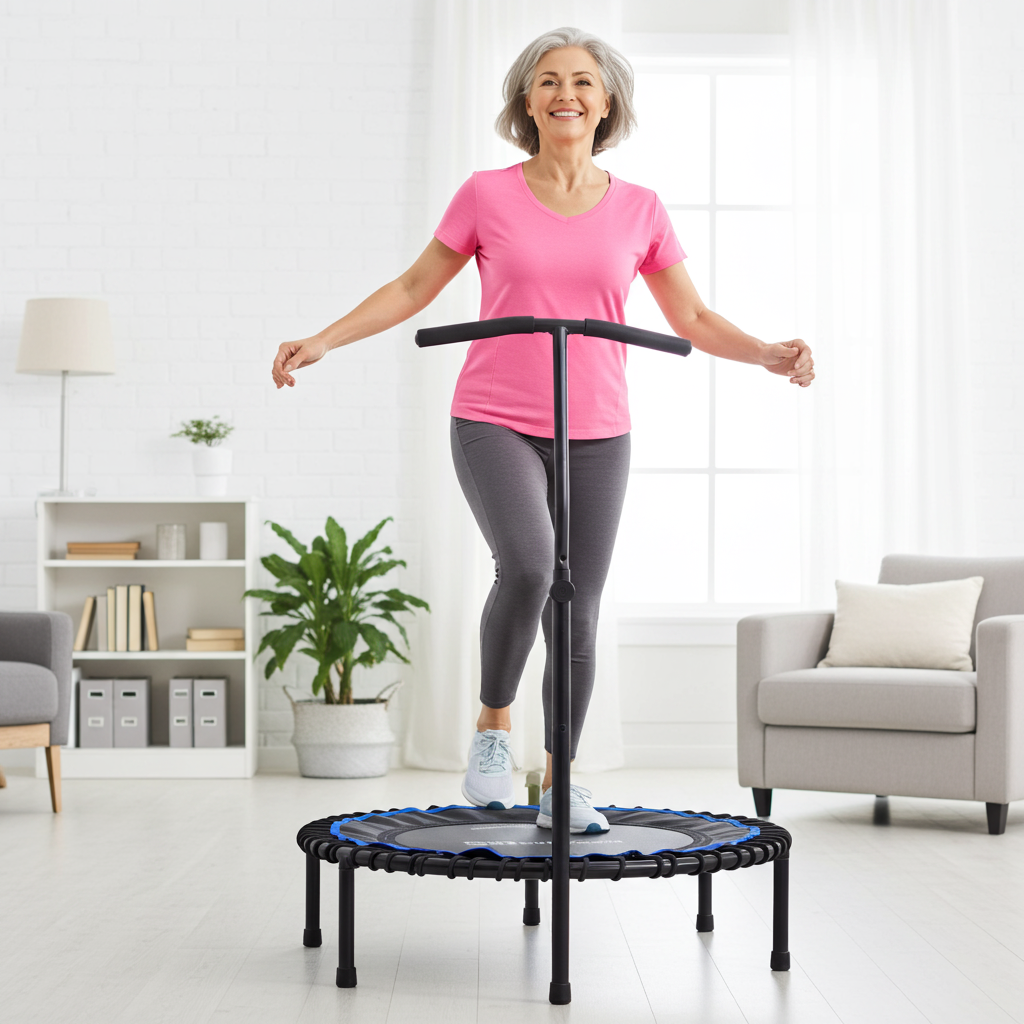
A stability bar (also called a T-bar or handle bar) is a sturdy bar you can hold while you bounce. It’s available for all of our rebounders, so you can add one when you buy, or later if you decide you want one.
A stability bar is worth having if:
- You’re new to rebounding and want extra confidence while you find your feet
- You have balance concerns, or you’re bouncing as part of getting back to exercise
- You’d simply feel more secure with something to hold
You can happily skip it if:
- You’re a steady, confident bouncer
- You like to use your arms freely in your workouts
One thing to know: it’s for balance, not for leaning on. A stability bar is there to steady you, so hold it lightly. Don’t put a load of weight through it, and don’t hang on it while you bounce vigorously. Gripping hard and pulling on the bar drags your neck into poor alignment, which isn’t recommended. If you find you need to lean on it, drop the intensity and bounce gently until you feel steady.
Not sure? There’s no wrong answer. Plenty of people start with a stability bar and stop using it as their confidence grows.
In Summary
- Size: 40″ suits most adults; go up to 44″ (Just Bounce) or 47″ (Fit Bounce Pro XL) if you’re tall, need therapy support, or simply want more room
- Bungee vs Spring: bungee is quieter and more controlled; spring suits faster-tempo fitness bouncing
- Folding: non-folding is simplest if you have a permanent spot; folding models help if you genuinely need to resize occasionally, but it isn’t a daily pack-away feature for most models
- Stability bar: a great confidence-builder for beginners and anyone who wants something to hold; optional, and available separately for every model


