


Rebounding for schools
EduBounce is a whole-school programme that uses short, structured, purposeful movement on a mini trampoline to help children regulate before and throughout the school day.
A Whole-School Programme To Help Children Regulate Before And Throughout The School Day
Our belief is that children self-regulate most effectively when an activity is rhythmic, repetitive and regular and… fun! The most successful interventions are those that incorporate these activities seamlessly into a child’s normal school routine.
EduBounce is structured so that rebounding can be easily and effectively incorporated before, during and after the school day:
Sensory Circuits
At the start of the day to encourage children into school and ensure that they are calm, focussed and ready-to-learn when entering their first lesson.
Bounce Breaks
<10 min sessions at scheduled intervals depending on what each child needs. Small group or 1-on-1 sessions supervised by 1 adult using streamed videos from the EduBounce Teacher Resource Hub.
Decompression Sessions
At the end of the school day for those children who have worked extremely hard to sit still and focus during the day but struggle as soon as they go home (sensory circuits in reverse).
Session Reporting & Tracking
The EduBounce portal turns the mental, emotional and physical benefits of rebounding from a well-meaning intervention into a fully evidenced, school-wide programme.
Rebounding at The Quinta School
Rebounding for Schools
Parent Testimonial
Parent Testimonial
Funding
EduBounce Qualifies for Government Inclusion Funding
In April, the Department of Education announced that every mainstream primary and secondary school in England is receiving new, ring-fenced government funding to support inclusion – the Inclusive Mainstream Fund (IMF) – as part of the Government’s Schools White Paper, Every Child Achieving and Thriving.
The Inclusion Mainstream Fund outlines a clear expectation: schools must not simply spend the money, they must evidence that spending across all seven themes, demonstrate measurable impact and publish a strategy that withstands scrutiny from governors and Ofsted.
EduBounce is a whole-school programme that does exactly that. EduBounce uses short, structured, purposeful movement on a mini trampoline to help children regulate before and throughout the school day. The EduBounce portal provides the tracking and reporting gives SENCOs and SLT the structured evidence to populate that strategy directly, without extra admin.
We’ve produced a full Business Case for schools to review and use that sets out the theme-by-theme alignment in detail – if you’d like to discuss this, please get in touch with us.
Why EduBounce?
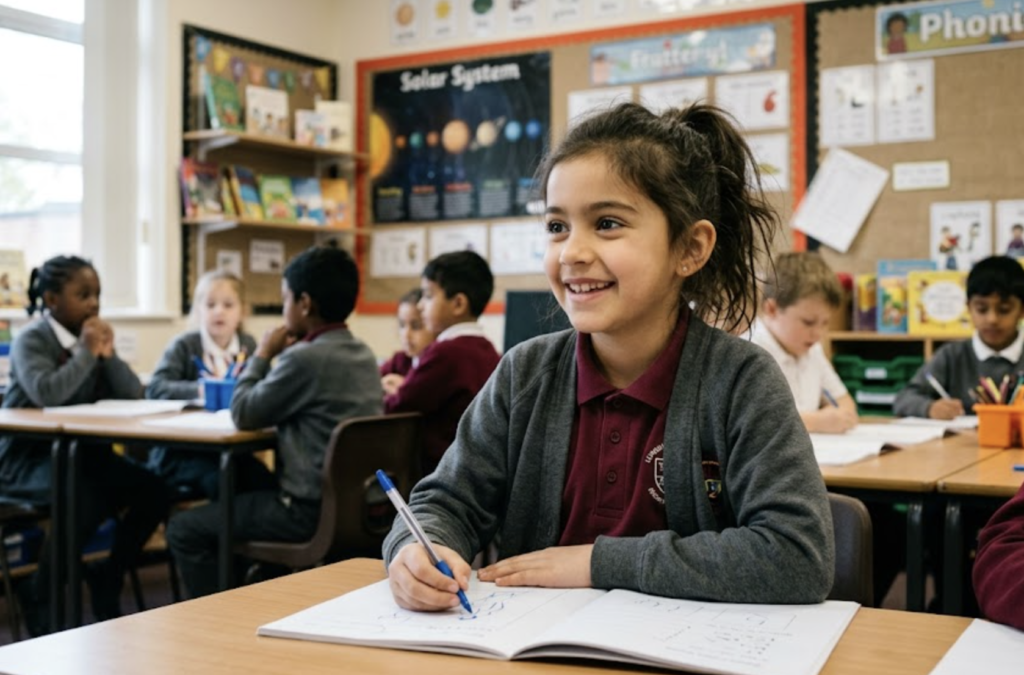
A Regulated Child Learns Better
By seamlessly integrating structured bouncing and sensory support into the school day, EduBounce provides targeted early intervention for pupils with identified or suspected SEND, while offering inclusive, active opportunities to move for the whole school.
Our focus is on how we can help a child to become regulated, supporting parents and teachers as well as the child, so that:
- A child will look forward to school, arrive calm, focussed and ready-to-learn.
- A parent can leave their child at school knowing they are happy and ready to learn.
- A teacher faces fewer behavioural disruptions in the classroom, protecting valuable teaching time and allowing them to focus on helping children to enjoy learning.
- A SENDCo has the data and evidence they need to report on effectiveness of interventions.
Why EduBounce?
Inclusive & Accessible Exercise
Rebounding is an exceptionally inclusive and accessible form of exercise that brings the joy and benefits of movement to every child, regardless of their ability or needs. The low-impact, rhythmic nature of bouncing on a mini-trampoline makes it safe and adaptable, deliberately addressing common barriers to physical activity.
Unlike many traditional sports or forms of PE that may exclude children with physical limitations, sensory sensitivities, or specific learning needs (SEND), EduBounce is designed to accommodate all. Rebounding is rhythmic, low-impact yet and incredibly effective, allowing children to participate successfully and confidently, building not only physical strength but also self-confidence and a sense of belonging among peers.
Why EduBounce?
An easy to integrate, whole-school programme
We understand that Teachers can become “over subscribed” so also offer the training to Young Sports Leaders to enable them to teach a class to their peer groups or younger children providing they have adult supervision. These are usually those children who are studying PE at GCSE or A Level or who have an active interest in fitness themselves.
Increasingly schools are also buying in expertise and there are many freelance fitness instructors who would be keen to be invited in to teach in schools.
The same equipment can be used to teach children as well as adults, so there is plenty of scope for hiring the equipment to freelance instructors for use outside school hours. We know that many schools work alongside leisure centre operators to offer more community based classes.
Why EduBounce?
Joyful Movement
EduBounce is playful and purposeful – it’s intrinsically enjoyable for children. The simple, rhythmic act of bouncing on a mini-trampoline is a source of genuine fun, immediately transforming a child’s mood from stress or restlessness into positive engagement.
The “feel-good” factor that Rebounding provides is critical, as it encourages voluntary participation and ensures that children associate movement and self-regulation with positive reinforcement, laying the foundation for a lifetime of healthy emotional management.
The playful nature of bouncing makes the essential work of self-regulation accessible and rewarding. When children feel happy and confident, their emotional and mental systems are already in a balanced state. EduBounce leverages this positive momentum to quickly help children reset their focus, ensuring they return to the classroom with a sense of calm and readiness to learn.
Why EduBounce?
Invest in impact, not equipment
In a busy school day, the pressure is on: tight budgets demand multi-use solutions, and increasing pupil needs demand resources that genuinely reach everyone.
You need equipment that isn’t just used during a single PE lesson, but that serves the whole child and the whole school—from the highly able athlete to the pupil with complex needs.
EduBounce provides significant returns across a school’s most critical budgets: staff capacity, instructional time, and student wellbeing.
The most substantial long-term return on investment is found in the programme’s effect on Learning Readiness. A classroom with fewer disruptions and higher concentration levels is a classroom that maximises educational output. “Bounce breaks” are purpose-built to improve concentration, memory, and focus—the cognitive pillars of learning.
The immediate boost in student self-sufficiency following a “Bounce Break” translates directly into reclaimed teaching minutes and maximises the effective time of teaching staff and learning support, offering a measurable return on staff capacity.
New
The EduBounce Portal
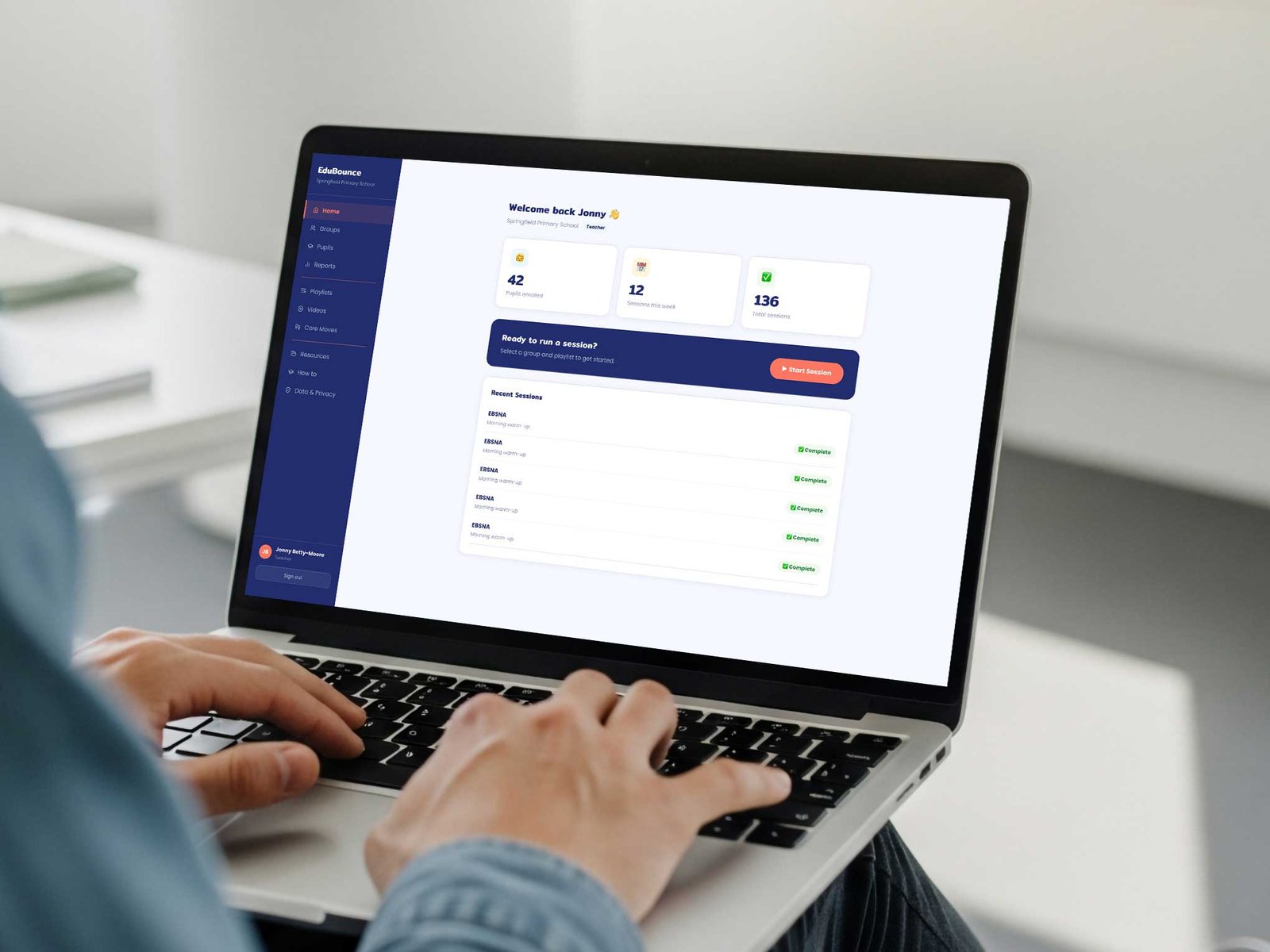
The EduBounce Portal turns the mental, emotional and physical benefits of rebounding from a well-meaning intervention into a fully evidenced, school-wide programme.
Session Reporting & Tracking
EduBounce doesn’t just support the delivery of a proven, regulation-building physical intervention, it gives schools the evidence infrastructure to justify it, repeat it and scale it with ease.
Contact Us For More Information
Frequently asked questions
What is EduBounce?
EduBounce is a whole-school programme that uses short, structured, purposeful movement on a mini trampoline, that blend physical movement with learning and wellbeing, to help children regulate before and throughout the school day.
What equipment do we need?
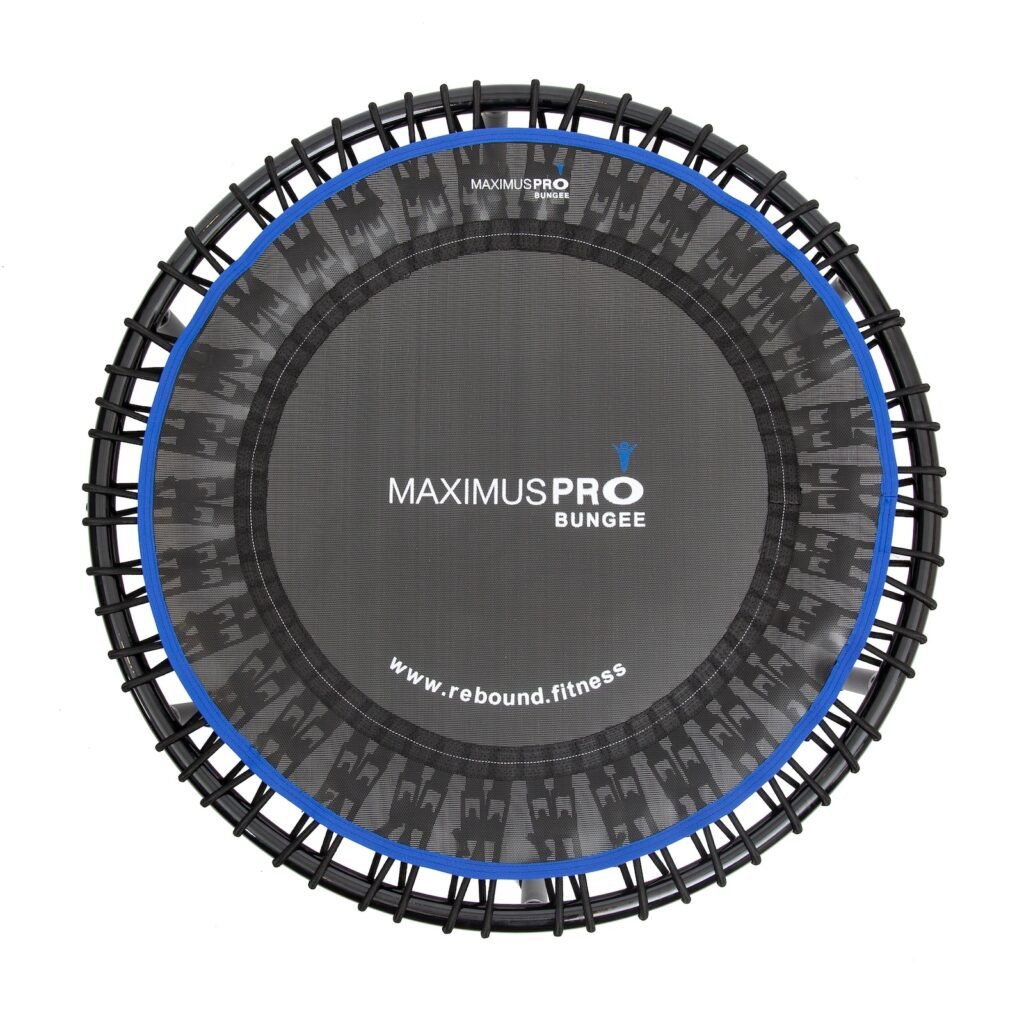
EduBounce runs on our mini trampolines (rebounders) – included in your package. Each rebounder is compact, safe for indoor use, and requires no assembly. A package of 8 rebounders is the recommended minimum for a group session.
What does the EduBounce portal include?
The EduBounce Portal turns the mental, emotional and physical benefits of rebounding from a well-meaning intervention into a fully evidenced, school-wide programme.
Teachers plan sessions in minutes using pre-built playlists of core moves, log attendance and observations against each pupil and download progress reports that SENDCos need for EHCP reviews, ISP targets and Pupil Premium accountability – reports that used to take hours, generated in moments.
Each session is tracked and every child’s progress is visible.
EduBounce doesn’t just support the delivery of a proven, regulation-building physical intervention, it gives schools the evidence infrastructure to justify it, repeat it and scale it with ease.
How does the EduBounce portal tracking & reporting work?
Our web app allows staff to log session attendance and engagement effortlessly. Easily analyse patterns over time and generate plain-language reports. Reports can be downloaded as PDFs, ready to attach to EHCPs.
What does the training include and how long is it?
Staff training and assessment can be done in two hours and convers:
1. Theory
- The Science of Rebounding: Understanding physiological benefits, G-force impact, and lymphatic circulation.
- Sensory & Neurodevelopment: Exploring how bouncing assists with primitive reflex integration and vestibular processing.
- SEND & Regulation Frameworks: Learning to utilise the 3 R’s (Rhythmic, Repetitive, Regular) for classroom de-escalation.
- Health & Safety: Space requirements, looking after the rebounders, and the difference between rebounding and trampolining.
2. Practical
- Mastering Core Movements: In-depth breakdown of core bounce mechanics, postures and movement patterns.
- Designing Sessions: Structuring alerting, organising and calming sequences tailored to a child’s needs.
- Daily Integration: Implementing rebounding into the school day: Sensory Circuits and proactive “Bounce Breaks”.
- Implementation & Delivery: Launching sessions, communication, measurement, outcomes and reporting.
What are 'Bounce Breaks'?
Bounce Breaks are 5–10 minute rebounding sessions designed to slot into natural transition points in the school day – before lessons, after lunch, or at the start of the afternoon. They are planned into a child’s day as needed for each individual child so that they can effectively regulate. They don’t require a dedicated PE slot.
Why are you launching EduBounce now?
The Every Child Achieving and Thriving white paper sets out a really clear direction for schools – not just regarding SEND and PE classes – for inclusion and activity throughout the school day.
Schools need to invest in whole-school initiatives that deliver broader benefits beyond PE, and that have a transformative impact for SEND.
The EduBounce programme directly meets 8 of the 9 areas of focus for activity:
- Daily physical activity ✅
- Inclusion ✅
- Mental wellbeing ✅
- Reducing inactivity ✅
- Support for SEND pupils ✅
- Swimming and water safety ❌
- Wider enrichment opportunities ✅
- Sustainable school improvement ✅
- Improving confidence and engagement ✅
How should we fund EduBounce?
We know budgets are tight right now. The cancellation of the PE and Sport Premium has left schools looking hard at where funding for programmes like this can come from.
We understand that – and we wouldn’t be bringing EduBounce to you without having thought seriously about how schools can make it work and in the long-term, even save you money as well
We have a number of ideas and funding routes that we’re actively exploring with schools, and we’d love to talk you through what might be possible for yours.