Keeping your balance isn’t just about staying upright – it’s about staying independent. As we get older, our sense of balance naturally begins to shift, but that doesn’t mean we have to accept it as an inevitable part of aging.
One of the most effective and enjoyable ways to reclaim your stability is through Rebounding. In this article, we’ll explore the science behind balance, the specific exercises that work, and why a Rebounding stability bar is the secret weapon for safe, effective training.
Quick Summary: How to Improve Balance for Older People
- The Problem: Aging reduces proprioception (the body’s ability to sense its position in space) and core strength, leading to a higher risk of falls.
- The Solution: Rebounding on a high-quality mini-trampoline challenges your centre of gravity in a controlled, low-impact environment.
- The Result: Regular rebounding for just 10–15 minutes a day can strengthen your core, improve reaction times, and significantly boost your confidence on your feet.
Why Balance Matters More as We Age
Falls are a leading cause of injury for people over 65, often resulting from a gradual decline in muscle mass and the slowing of proprioception. This is your brain’s ability to talk to your feet and joints to tell them where they are in space.
When you practice exercises to improve balance as you get older, you aren’t just working your legs; you’re retraining your nervous system to react faster to a slip or a trip.
How Rebounding Improves Balance
Rebounding is uniquely effective because the surface of a rebounder is unstable. Every time you bounce, your body must engage its deep core muscles and stabilisers to maintain equilibrium.
The Role of Proprioception
As you land on the elastic mat, the surface gives way slightly. This requires your brain to constantly adjust your posture. Research has shown that consistent mini-trampoline training can improve a senior’s ability to regain balance by nearly 35% over 14 weeks.
4 Exercises to Improve Balance on a Rebounder
If you are looking for how to improve balance for older people, start with these low-impact movements:
- The Health Bounce: Keep your feet on the mat and gently pulse up and down. This stimulates blood flow and gets your brain used to the moving surface.
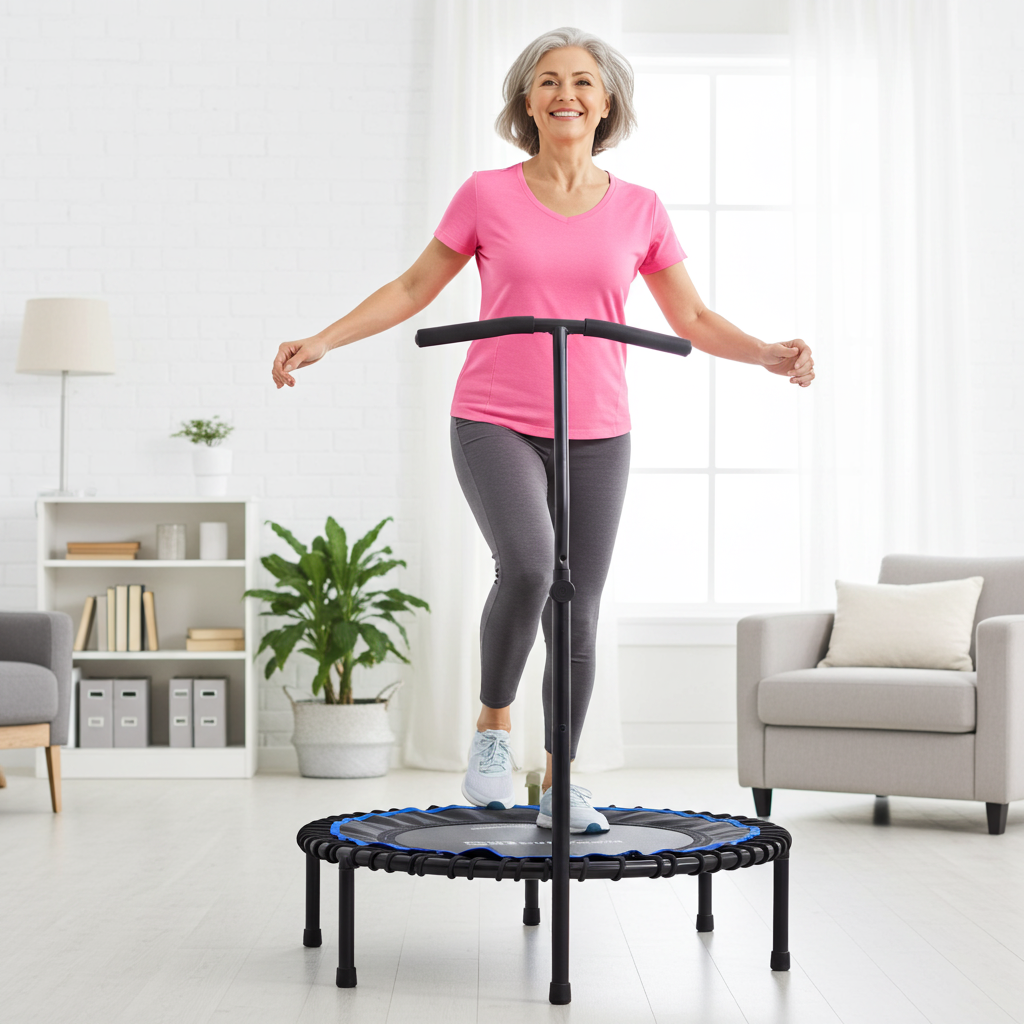
- The March: Lift your knees one at a time as if marching in place. This forces you to balance on one leg for a split second, a key skill for walking safely.
- Side-to-Side Sway: Gently shift your weight from your left foot to your right foot. This strengthens the lateral stabilisers in your ankles and hips.
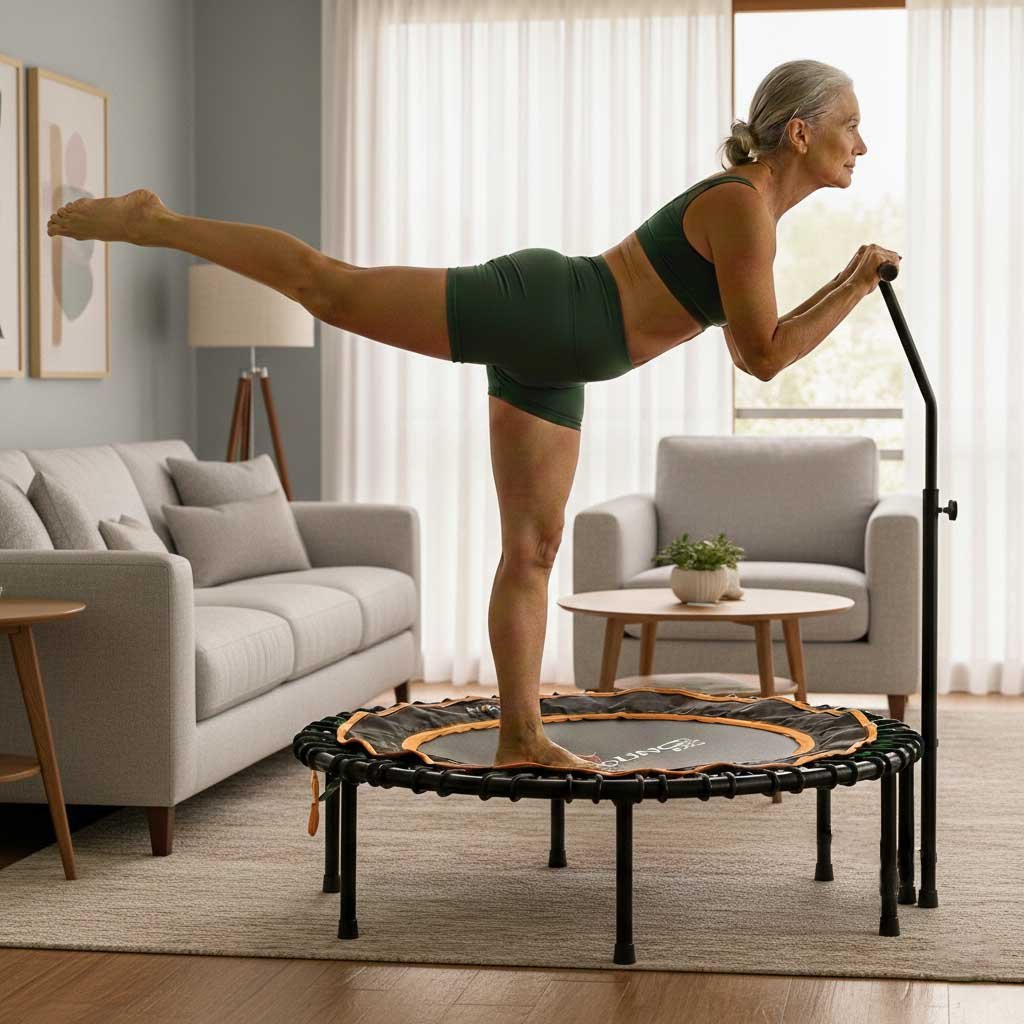
- Single-Leg Stance: While holding onto a stability bar, try lifting one foot off the mat and holding for 5–10 seconds. This is the ultimate exercise to improve balance.
The Benefit of a Stability Bar
For many seniors, the fear of falling while exercising is a major barrier. This is where a stability bar or T-bar becomes essential.
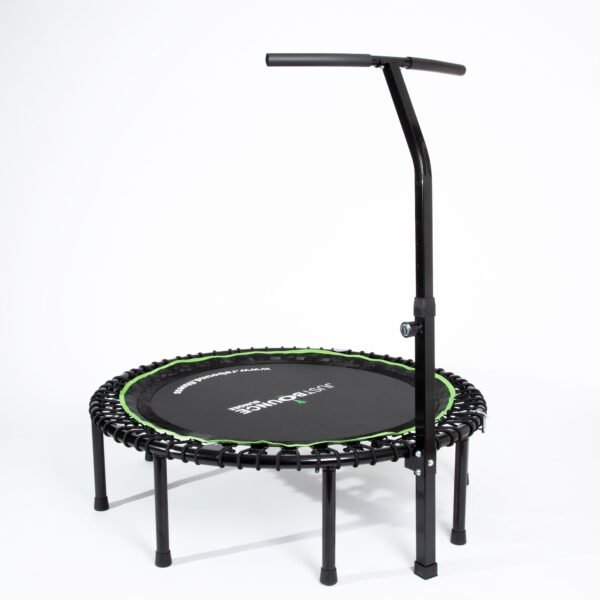
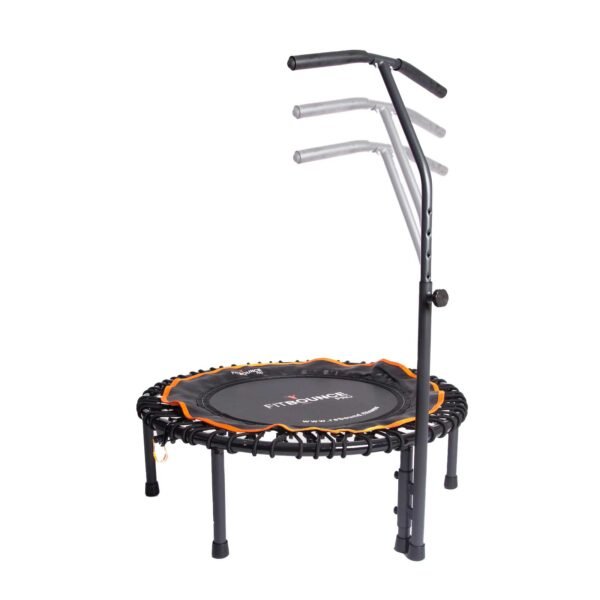
A stability bar acts as a safety net. It allows you to perform more vigorous movements – like high knees or wider bounces – without the fear of losing your footing. It provides a point of reference for your brain, making the transition to better balance feel safe and supported.
Our Recommended Rebounders for Seniors
If you are ready to start rebounding to improve balance, we recommend our professional-grade models designed specifically for safety and durability:
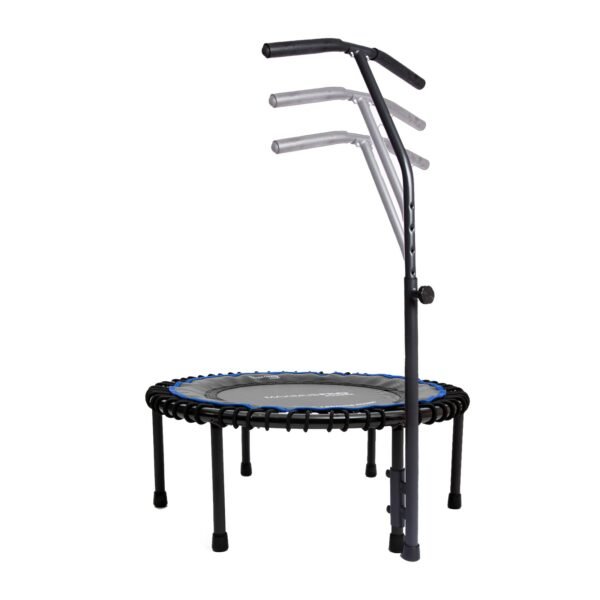
- Fit Bounce Pro Rebounder with T-Bar: This is our most popular model for home use. It features a silent, bungee-sprung system that is incredibly kind to aging joints and comes with a 7-height adjustable stability bar.
- Maximus Pro Bungee Rebounder with T-Bar: A robust, non-folding option for those who don’t need to fold away their Rebounder. It offers maximum stability for those who want a permanent, high-performance station for their daily balance routine.
Common Questions About Improving Balance (FAQs)
What is the best exercise to improve balance for seniors?
While walking and yoga are great, rebounding is often considered superior because it combines core strengthening, proprioception training, and cardiovascular health in a single, low-impact activity.
How long does it take to see improvements in balance?
Most users report feeling more “steady” on their feet within 2 to 4 weeks of daily 10-minute sessions. Significant gains in muscle strength and coordination usually peak around the 3-month mark.
Is it safe for someone with osteoporosis?
Yes. In fact, NASA research has shown that the G-force created by rebounding can help increase bone density. However, always use a stability bar and consult with your doctor before starting a new routine.
Take the first step toward a steadier future.
Improving your balance is one of the best investments you can make in your long-term health. By incorporating these exercises to improve balance into your daily life, you can stay active, stay safe, and stay independent.
-
Pre-Order Sale!
 Select options
This product has multiple variants. The options may be chosen on the product page
Select options
This product has multiple variants. The options may be chosen on the product page