

There’s a lot of interest online about rebounding and bone density — some people swear by it, others are more sceptical, and it’s easy to see why opinions differ once you look at the research itself. So let’s take a proper look at what the actual studies say, encouraging findings and all.
The gold standard for bone-building exercise is typically high-impact activity on a hard surface — running, jumping, skipping. But if you have joint pain, arthritis, hip or knee issues, or balance concerns, that kind of exercise may simply not be accessible or safe. Rebounding still opposes gravity with every bounce, while the mat absorbs much of the shock that a hard floor wouldn’t — making it a genuinely effective lower-impact option for increasing bone density.
In short, rebounding does support bone health, and there’s real science behind that. Is rebounding the single most powerful bone-building exercise available? No. Can Rebounding perform bone-density increasing miracles on its own? Also no. But it’s a genuine, evidence-backed contributor for improving bone density and bone health — and for a huge number of people, particularly those who can’t tolerate high-impact exercise on hard surfaces, it’s one of the best options available. That’s well worth celebrating.
Important Medical Disclaimer: We’re passionate about the benefits of rebounding, but your health and safety is our priority. This article is for informational purposes only and does not constitute medical advice. Maintaining a healthy lifestyle is a powerful tool in risk reduction, but it is not a guarantee of prevention. Please consult your GP or healthcare provider before beginning a new exercise regime, especially if you are managing a previous diagnosis or other health conditions.
How Bones Actually Respond to Exercise
Bone isn’t static. It’s living tissue that constantly rebuilds itself, and — much like muscle — it adapts to the demands you place on it. This is sometimes called Wolff’s Law, or more precisely, the “mechanostat” theory: when a bone experiences mechanical loading (force, impact, the pull of muscles working against gravity), it responds by laying down more bone tissue to cope with that load. Sit still for long enough, and the opposite happens — bone density gradually declines.
This is exactly why weight-bearing exercise is recommended for bone health, and why exercises like swimming or cycling — brilliant for cardiovascular fitness — don’t do much for your bones. There’s no meaningful load working against gravity in the same way. And important to note, Rebounding is weight-bearing exercise!
Rebounding sits in an interesting middle ground. Every bounce involves your whole body working against gravity, repeatedly and for a sustained period — considerably more mechanical loading than a non-weight-bearing exercise, but gentler than the harsh impact of jumping on concrete or a hard surface.
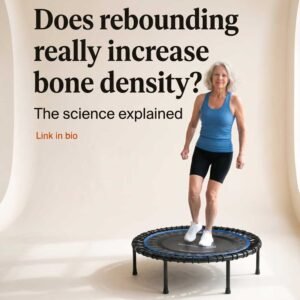
What the Research on Rebounding and Bone Density Actually Shows
Competitive trampolinists show a clear difference
The strongest evidence comes from a 2016 study published in the Journal of Sport and Health Science, which compared competitive trampolinists to non-trampolinist controls. The trampolinists had measurably higher bone density at the hip and spine, denser and thicker trabecular bone structure, and greater estimated bone strength overall.
It’s a genuinely exciting data point — and worth reading with the right context. This was a small study of 14 trampolinists against 15 controls, all young women engaged in serious competitive training, bouncing far higher and harder than anyone would in a living room workout. It shows that trampolining really can build meaningfully stronger bones — great proof of the underlying mechanism at work, even if home rebounding won’t produce quite the same dramatic results. We can’t all be elite olympic athletes after all!
Postmenopausal women: a genuinely mixed picture
This is where it gets really interesting. Two separate 12-week studies looked at very similar groups — older or postmenopausal women doing structured mini-trampoline programmes — with genuinely encouraging results across the board, even if they didn’t fully agree on one specific measure.
One study (Fricke et al., 2023, Journal of Women’s & Pelvic Health Physical Therapy) found a statistically significant increase in bone mineral density compared to a control group after 12 weeks.
Another, very similarly designed study (Posch et al., 2019, Clinical Interventions in Aging) found real, significant improvements in balance, strength, mobility, gait speed and fear of falling — but the bone density improvements at the spine and hip, while trending upward, didn’t quite reach statistical significance.
So while the bone density number itself is genuinely mixed between the two studies, the bigger picture is a positive one: consistent, meaningful improvements in exactly the areas that keep people steady on their feet and out of harm’s way.
Why Rebounding Still Makes Sense for Bone Health
None of this means rebounding is pointless for your bones — quite the opposite. Here’s the honest, positive case for Rebounding to improve bone density and bone health:
- It’s genuinely better than doing nothing, or than non-weight-bearing exercise. Every bounce loads your skeleton against gravity, repeatedly, which is the basic mechanism your bones need to stay strong.
- It’s a real alternative for people who can’t tolerate high-impact exercise. Rebounding gives you the gravity-opposing benefit without the joint strain of a hard-surface workout — a genuinely effective lower-impact option for increasing bone density than jumping on an unforgiving hard surface.
- The balance and strength benefits matter for fracture prevention, even independent of the bone density number. Most serious osteoporosis-related injuries happen because of a fall, not because of bone density in isolation. The consistent, strong finding across the research — improved balance, strength, and reduced fear of falling — genuinely reduces real-world fracture risk, regardless of what the DXA scan says about density alone.
- The best exercise is the one you’ll actually keep doing. If rebounding is what gets you moving three times a week, consistently, for years — that adherence alone carries real value that a “theoretically superior” exercise you give up after a fortnight doesn’t.
Getting the Most Bone-Building Benefit from Rebounding
If bone health is a specific goal, a few things from the research are worth applying:
- Consistency beats intensity. Studies showing real benefit used 2–3 sessions a week, sustained over 12 weeks or longer — not occasional bouncing.
- Pair it with resistance training if you can. Rebounding is a strong complement to strength work, not a replacement for it — the two together cover more of what bone actually responds to.
- Don’t expect it to work alone if you have diagnosed osteoporosis. If you’ve been diagnosed with osteoporosis or osteopenia, rebounding is a great addition to an exercise routine, but it should sit alongside guidance from your GP or physiotherapist, not replace it.
In summary
Rebounding isn’t a miracle cure for increasing bone density, and it’s not going to replace the gold-standard, high-impact exercises for everyone. But it’s far from a gimmick, either. The real evidence shows a genuine, gravity-opposing exercise that supports bone health, backed by real research — and one of the very few effective options for people whose joints simply can’t handle high-impact exercise on a hard floor.
Our Recommended Rebounders
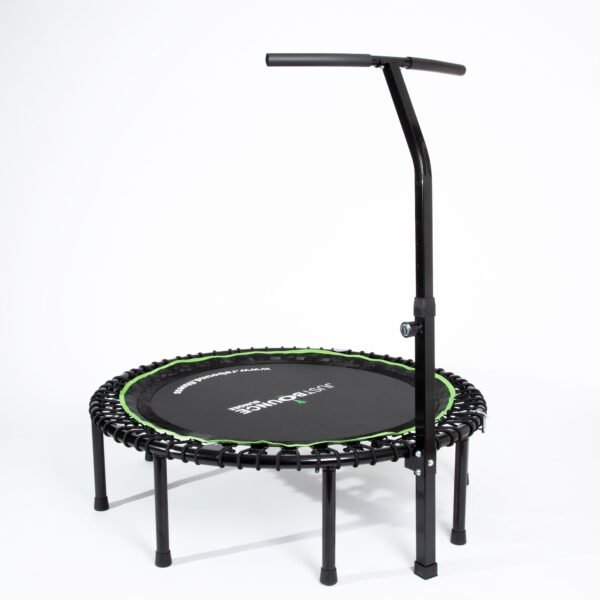
Explore our premium range of low-impact, orthopaedic-quality rebounders designed to maximise the benefits of rebounding while keeping your joints completely safe. Here are some of the rebounders we recommend:
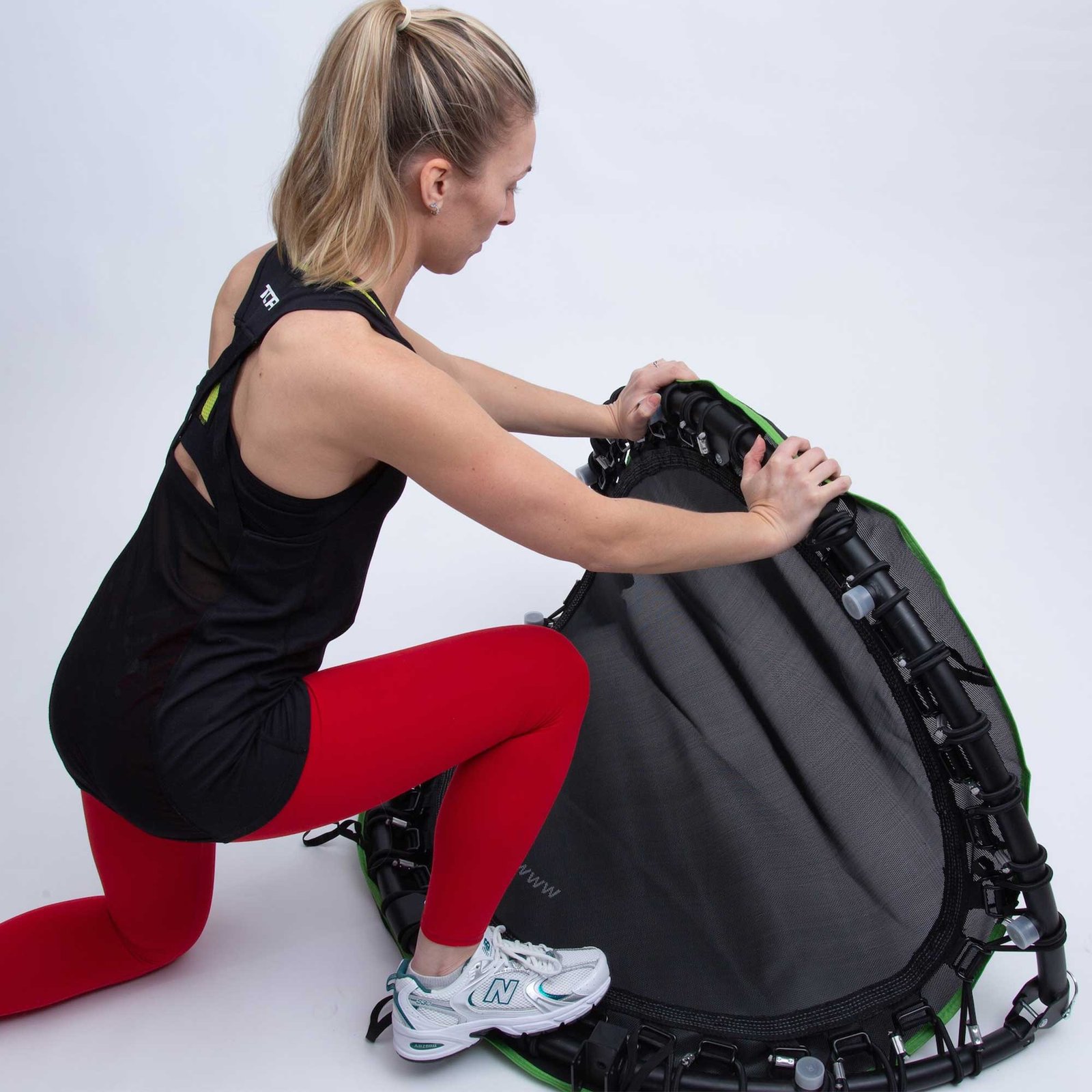
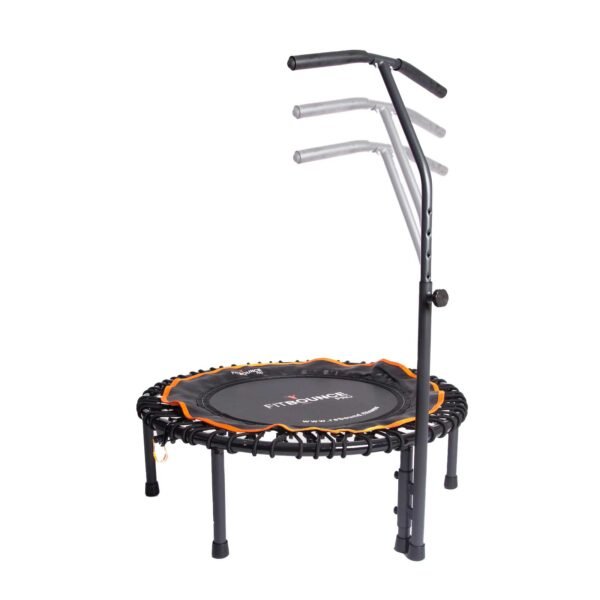
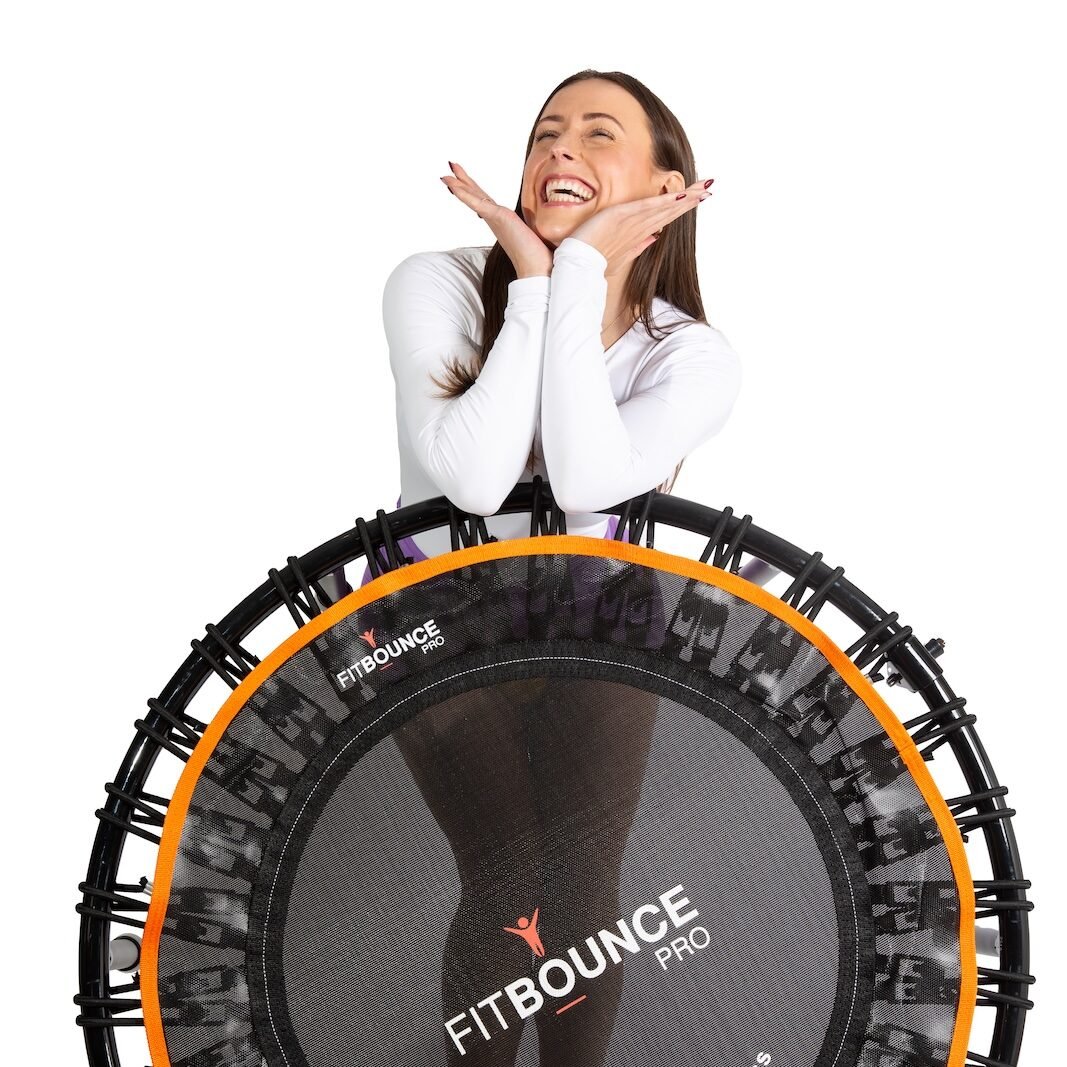
- Fit Bounce Pro Rebounder: This is our most popular model for home use. It features a silent, bungee-sprung system that is incredibly kind to aging joints, comes fully assembled and folds in half for easy storage and transportation.
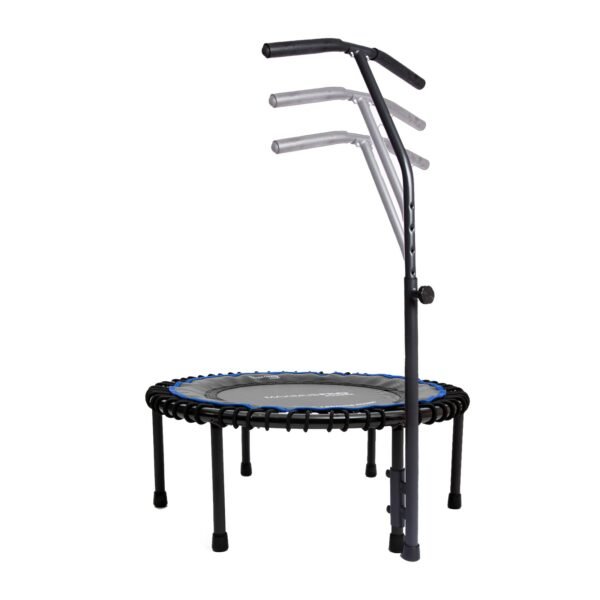
- Maximus Pro Bungee Rebounder: A robust, non-folding option for those who don’t need to fold away their Rebounder. It offers maximum stability for those who want a permanent, high-performance station for their daily balance routine.
-
 Select options
This product has multiple variants. The options may be chosen on the product page
Select options
This product has multiple variants. The options may be chosen on the product page

Important Medical Disclaimer: We’re passionate about the benefits of rebounding, but your health and safety is our priority. This article is for informational purposes only and does not constitute medical advice. Maintaining a healthy lifestyle is a powerful tool in risk reduction, but it is not a guarantee of prevention. Please consult your GP or healthcare provider before beginning a new exercise regime, especially if you are managing a previous diagnosis or other health conditions.
A Note on the Science: Sources referenced include
- Burt LA, Schipilow JD, Boyd SK. Competitive trampolining influences trabecular bone structure, bone size, and bone strength. J Sport Health Sci. 2016;5(4):469-475.
- Fricke A, Fink P, Rowlands D, Lark S, Mündel T, Shultz S. Mini-trampoline jumping as an exercise intervention for postmenopausal women. J Womens Pelvic Health Phys Ther. 2023;47(1):19-25.
- Posch M, Schranz A, Lener M, et al. Effectiveness of a Mini-Trampoline Training Program on Balance and Functional Mobility, Gait Performance, Strength, Fear of Falling and Bone Mineral Density in Older Women with Osteopenia. Clin Interv Aging. 2019;14:2281-2293.
- Rubin C, et al. NASA-funded research on low-magnitude, high-frequency vibration and bone formation (Stony Brook University / NASA).